

s

Walking into a subject like near death experiences for the first time can feel overwhelming. There are survivor accounts, medical studies, religious interpretations, and skeptics all talking about the same handful of minutes in a hospital room or at the scene of an accident. I will give you a plain, honest orientation before you go further into the site. Think of it as the entry hall, not the whole house.
What a Near Death Experience Actually Is
A near death experience, usually shortened to NDE, is a set of experiences some people report after coming close to death: during cardiac arrest, a severe accident, surgery under anesthesia, or any event where the body comes close to shutting down. Not everyone in these situations reports one, and researchers have not settled on why some people do report their experiences and others do not. What makes NDEs worth studying is how consistent the reported features are across very different people, ages, and backgrounds, even when those people have never heard of an NDE before their own.
What People Commonly Report Afterward
Accounts vary, but certain elements show up again and again: a sense of leaving the body, moving through darkness or a tunnel, encountering a bright light, meeting deceased relatives or other beings, a rapid review of one’s life, and a point where the person feels they chose to stay or were sent back. Some reports are calm and even joyful. Others are disturbing. A good next step if this is the part that interests you most is to read actual accounts in Learn What People Say During Their Near-death Experience Interviews, where the focus stays on what people describe in their own words.

Two Lenses: Science and Spirit Both Have a Say
There are two broad camps trying to explain why NDEs happen, and both should be learned. The scientific camp looks at brain chemistry, oxygen levels, and how the dying brain might produce vivid, structured experiences. The spiritual camp takes the reports more literally, treating them as evidence of consciousness surviving the body. Neither side has fully closed the case, and this site treats that as the honest starting point rather than picking a winner upfront. The full argument on both sides is laid out in Scientific Explanations vs. Spiritual Perspectives on NDEs.
Why the Same Experience Sounds Different Across Cultures
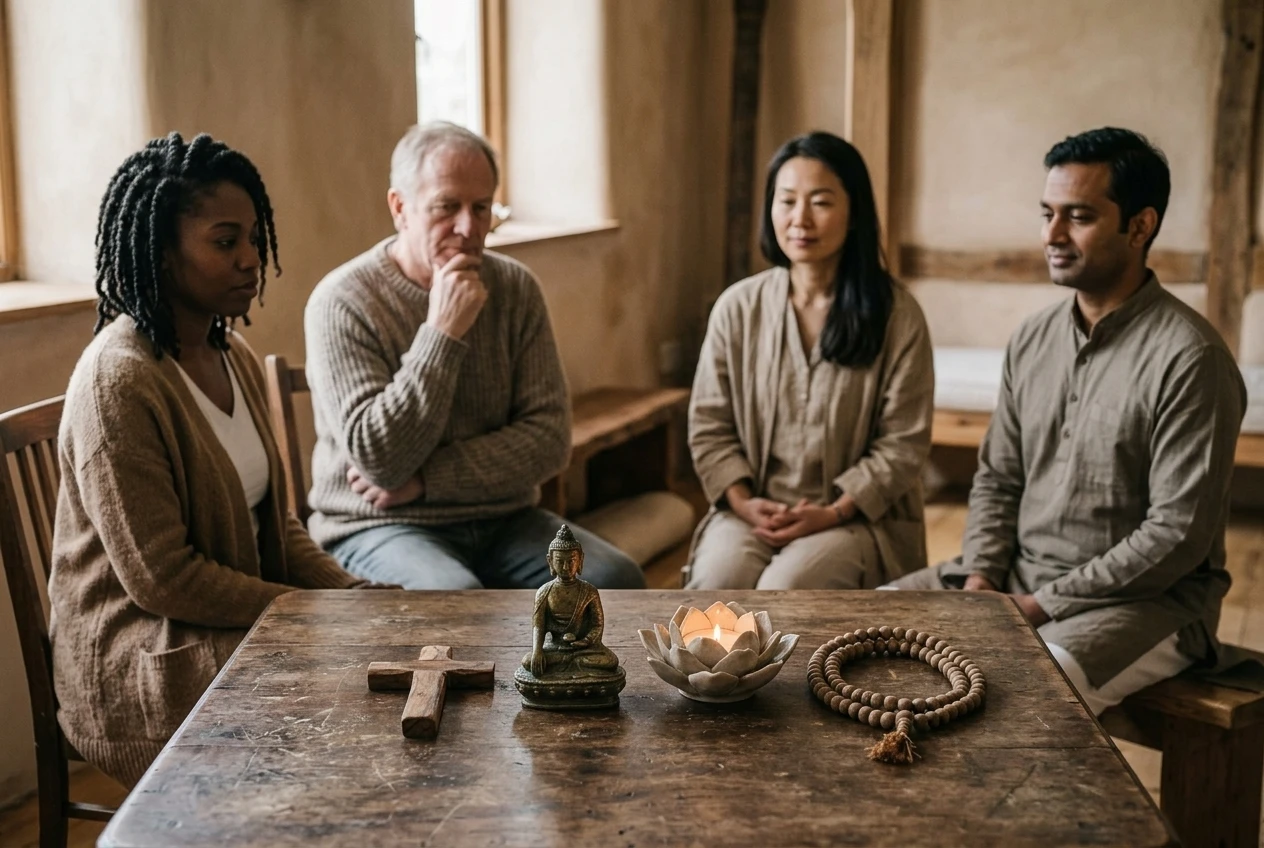
One detail that surprises new readers is how much culture shapes the way an NDE gets described. A tunnel and a light show up often in Western accounts. Other cultures describe the same core event using different imagery, different beings, and different meanings attached to the life review. That does not mean the experience itself is culturally invented, but it does mean the language people reach for afterward is shaped by what they already believe. This gets covered in detail in How Cultural Background Influences NDE Interpretation.
Where to Start Depending on What You’re Curious About
If you came here wondering what actually happens to consciousness when the body is dying, What Is a Life After Death Experience is a good place to go next. If your interest is more personal, meaning you want to hear directly from people who went through it, start with the interview accounts such as on YouTube. If you are more drawn to the debate between biology and spirit, the science versus spirit comparison is built for that. And if you simply want the clearest overall picture before branching out, there is one article built specifically for that purpose.
Who Is Behind This Research
This site is built around thorough research of survivor accounts, published research, and cultural material on near death experiences, organized by the author, Gerald, so a curious reader does not have to sort through all of it alone. You can read more about the Gerald behind the project on the About Gerald page.
The clearest place to begin is Discover the 9 Interesting Near Death Experience Stages. It lays out the full arc of a typical NDE in order, and every other article on this site fits somewhere inside that map.