
Consciousness research has always pulled in curious minds from neuroscience, psychology, philosophy, and even computer science. People have asked what it really means to be conscious and how awareness actually arises in the brain for centuries, but today’s scientists have some cool new tools at their disposal. Looking at where things are heading in 2026 and beyond, I’m seeing a pretty exciting blend of technology, crossfield collaboration, and openminded thinking. Here’s my breakdown of what I believe we’ll see, and why these advancements matter for all of us still wondering what makes the lights come on inside our heads.
What Drives the Future of Consciousness Research?
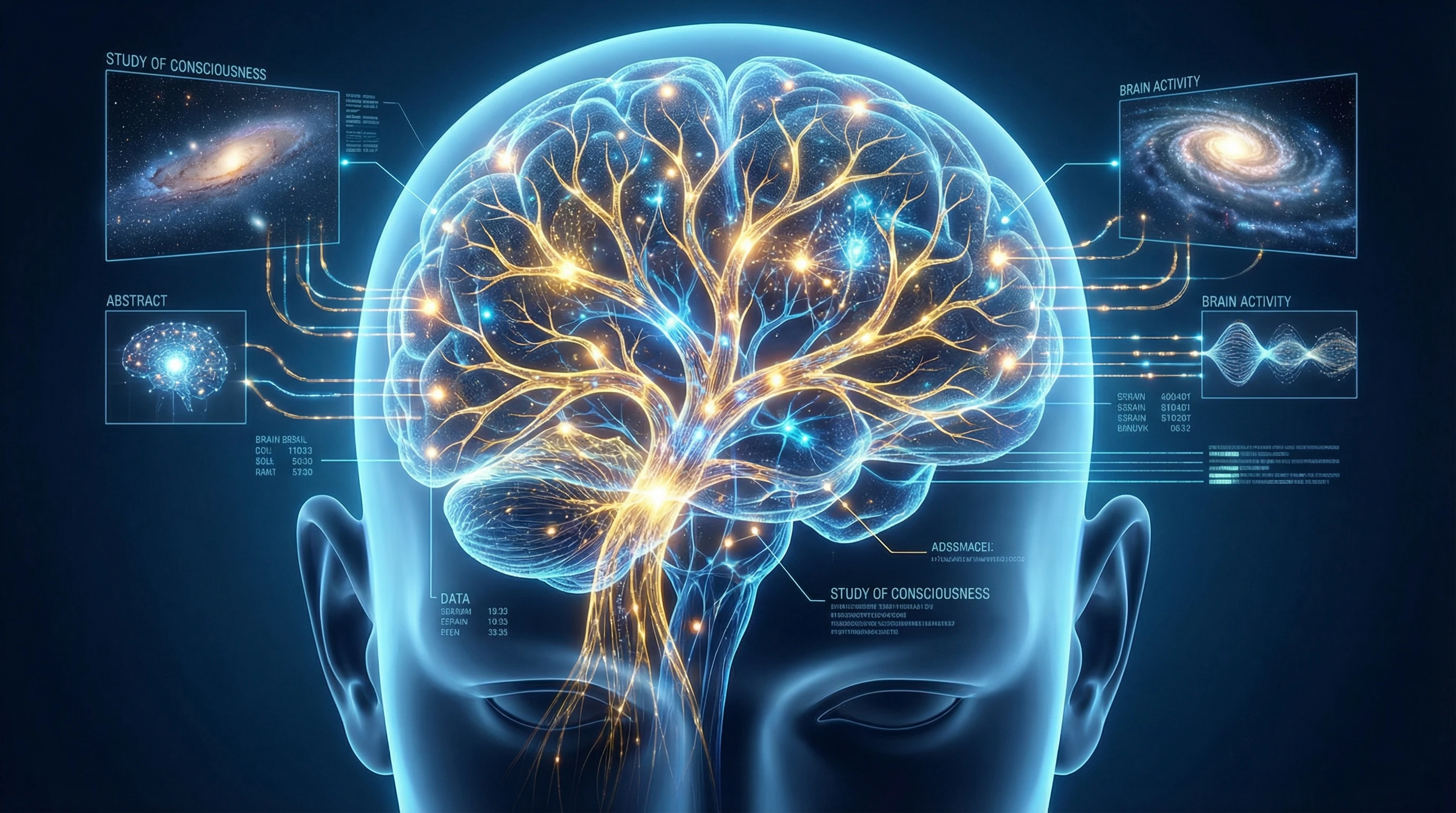
The next era of consciousness research is being shaped by emerging tech, new theories, and a willingness among researchers to work together in ways that hadn’t happened before. Over the past decade, interest in this field has skyrocketed because of advances in brain imaging, artificial intelligence, and genetics. Tech upgrades like functional MRI and highdensity EEG are getting even better at mapping when and where consciousness flickers in the brain.
Major institutes worldwide, think places like the Allen Institute for Brain Science and the Human Brain Project, are pouring resources into understanding how brain circuits lead to subjectivity and selfawareness. Add to this the popularity of interdisciplinary conferences and specialist journals that mix insight from computer science, philosophy, and even quantum physics, and you’ve got a field ready for some major breakthroughs.
If you’re curious, ScienceDirect and Nature Neuroscience both have updated reviews on these changes, showing just how quickly the pace is picking up.
Neurotech, AI, and New Tools Pushing Boundaries
Modern consciousness research got a serious boost recently thanks to new neurotechnology. Devices like highresolution fMRI and realtime brain activity trackers are helping scientists lay out the neural basis of waking life, dreams, and even altered states. But what’s especially interesting in 2026 and beyond is how artificial intelligence is taking things up a notch.
- Advanced Brain Imaging: Nextgen MRIs and portable brainwave monitors mean more natural and diverse testing environments. No need to limit studies to sterile hospital rooms.
- Machine Learning Algorithms: Powerful AI models can sift through huge brain datasets, catching subtle patterns connected to conscious awareness that human researchers would miss.
- BrainComputer Interfaces (BCIs): These let people communicate through direct brain activity. This is super useful for folks who can’t speak naturally, and gives realworld test beds for theories of consciousness.
Companies like Neuralink and university labs everywhere are putting these breakthroughs to use, showing that the future of consciousness science might be shaped by both neuroscientists and engineers working side by side.
The continued rise of wearable neurotech is also changing the game. Now, with the ability to monitor brain activity during everyday activities, labs can check responses to music, conversation, and even stressful events. This shift means experiments feel closer to real life, and findings may apply more directly to everyday consciousness.
Getting the Basics Down: Key Concepts on the Table
Even with all the new gadgets, consciousness research relies on clear ideas and testable questions. In 2026 and there after, there’s huge focus on pinning down some big questions:
- What is necessary for consciousness? Researchers keep searching for the “neural correlates”—the patterns of brain activity tied to awareness. Everyone wants to know if you need a specific set of neural circuits, or if consciousness can show up any time a brain hits a certain complexity.
- Is consciousness graded or binary? Some scientists see awareness as an on/off thing. Either you have it or you don’t. Others think there’s a sliding scale of conscious experience, from basic alertness up to fullon subjective mental life.
- Could machines become conscious? The rise of AI has heated up debates about whether computers could ever experience real subjectivity, or if they’re just mimicking people at a surface level.
Understanding these basics is really important for making sense of experiments, and keeps the field moving forward in ways everyone can check and argue about. These big questions shape how researchers design their studies, and spark lively debates during conferences and symposia focused on the puzzle of subjective experience.
Simple Guide: What’s Driving Change in Consciousness Research?
Plenty of factors are driving the momentum in this area. Here’s a quick look at what’s shaping things fast:
- Tech Upgrades: More precise imaging and computing gives deeper, realtime insights into brain states.
- Collaboration: Teams now include neurosurgeons, AI experts, philosophers, and even linguists. Mixing methods helps pin down elusive questions about the “why” and “how.”
- Diverse Perspectives: Studies are including data from meditation, psychedelics, and neurological disorders, not just typical brains at rest. This makes the field wider and studies more inclusive.
- Ethics Awareness: There’s a growing commitment to making research open, transparent, and sensitive to the rights of both human and nonhuman subjects.
If you’re thinking of getting involved, reading review papers from openaccess preprint servers like bioRxiv or arXiv are solid places to start. Joining discussion forums dedicated to the philosophy of consciousness can also help you stay up to date on debates and public lectures.
Things to Watch Out For: Common Hurdles
This field is super exciting but also complicated. A few roadblocks keep coming up for researchers:
- Interpretation of Data: Lots of experiments create huge datasets that AI can churn through, but figuring out what the results really mean takes patience and skepticism.
- Defining Consciousness: There’s still no simple, agreedupon definition for consciousness. Every lab has its own approach, which sometimes slows progress or leads to misunderstandings.
- Ethics and Privacy: Some neurotech raises real questions about privacy; imagine companies pitching directtobrain advertising or governments wanting to monitor citizens. Staying honest and transparent is really important here.
- OverHyping Results: Sensational headlines happen a lot in this corner of science. Careful research helps keep things grounded and stops dangerous misconceptions from spreading.
Dealing with Big Data
With advanced imaging, researchers are buried in data, but not all of it directly ties to experience. Finding ways to spotlight what matters, and getting the right context for brain patterns, can make or break a study. Some labs are starting to use crowdsourcing and opendata challenges to get fresh eyes on stubborn problems (Human Brain Project). Making data more accessible encourages citizen scientists and earlycareer researchers to contribute new insights and challenge established ideas.
The Hard Problem
One huge challenge still exists: the socalled “hard problem” of consciousness, a phrase popularized by David Chalmers. That’s the gap between describing a brain process and explaining exactly why there’s an experience attached. While no one has solved it, creative experiments, model building, and philosophical collaborations are helping researchers frame the problem more clearly. For a deeper look, the University of Arizona Center for Consciousness Studies provides interesting resources.
Experts now debate whether the hard problem can be addressed by refining our language or if it represents a fundamental unknown. Some are attempting crosscultural research to see if concepts about mind and experience vary, or if certain mental phenomena are universal.
Advanced Theories Worth Watching
Researchers continue to roll out new models, and some are getting a lot of attention as the field grows. Here’s a rundown on a few popular ones:
- Integrated Information Theory (IIT): Suggests consciousness boils down to integrated information, measured as “Phi.” New experiments are testing if higher Phi matches higher awareness in humans and possibly animals.
- Global Workspace Theory (GWT): Sees consciousness as a global “broadcast” of information in the brain, tying together distant regions for shared awareness. This is inspiring new tests that involve attention and decisionmaking studies.
- HigherOrder Thought Theory (HOT): Proposes that consciousness comes from thoughts about other thoughts; a metaawareness loop in the brain. Some current research in 2026 is finding ways to catch these “thoughts about thoughts” in action.
Peerreviewed publications like Trends in Cognitive Sciences and Frontiers in Psychology are reliable if you want to read up on these more. Newer journals are also popping up, encouraging submissions that tackle lesserexplored theories or unexpected findings from AI and comparative animal research.
Applications and RealWorld Examples
Breakthroughs in consciousness research aren’t just about pure theory; they’re fueling real advances. Neurotech is helping paralyzed patients use thought to move robotic limbs or type on screens. Some braincomputer interface projects have given people with severe motor disabilities the ability to communicate just by focusing their attention in certain ways. And with the latest studies on altered states, whether through meditation or psychedelics, mental health care is starting to see new, nontraditional treatments for chronic disorders like depression and PTSD.
- Mental Health: Testing psychedelics and mindfulness as ways to shift conscious states and treat stubborn mental disorders. Treatmentresistant depression and anxiety respond well to supervised sessions combined with talk therapy.
- Assistive Tech: Brain implants and external headsets designed to restore movement or allow communication for those who’ve lost it. Modern BCIs can track a user’s attention and intention, speeding up interaction with devices.
- Education: Using VR and personalized learning environments based on attention and selfawareness research. Customized feedback helps students stay engaged and supports kids with different learning needs.
Music therapy, artbased interventions, and even group mindfulness practices are also being studied for their ability to shift states of awareness and help those struggling with trauma. As more data emerges, expect more crossover between clinical practice and consciousness research labs.
FAQ: Clearing Up Common Questions
If you’re new to this subject, here’s what you might be wondering about the future of consciousness research:
Will we ever fully understand consciousness?
We’re making steady progress, especially with better tech and collaboration. Fully solving it might be a challenge, but each step gives insight that improves health care, AI, and how we see ourselves. Openness to new models and transparency in findings will keep pushing the field forward.
Can animals or machines become conscious?
Animal consciousness looks more likely with new comparative studies. Machine consciousness is still up for debate, with lots of research going into whether AI can reach anything like human awareness. Ongoing experiments observe signs of awareness in cephalopods, birds, and mammals.
How ethical are new experiments in consciousness?
Most leading studies stick to strict ethical codes and focus on informed consent, privacy, and animal welfare. New challenges come up with more powerful neurotech, so ongoing conversation and transparency are really important. Many organizations host ethics boards and public panels to review the latest projects before experiments even start.
Looking Ahead: The Road to Deeper Understanding
Consciousness research in 2026 and beyond is shaping up to be a wild ride, blending advanced tools, bold ideas, and smart teams from all sorts of backgrounds. Even though big questions remain, every experiment and new theory brings us a bit closer to grasping what makes each moment of our experience feel real. Staying curious and open to new developments is a pretty good way to keep up with this fastmoving field, and I’ll keep sharing updates as new discoveries roll in. If you’re excited by the unknowns, there’s never been a better time to jump into the conversation and see where your questions might lead.